
Reading · Close attention
The pause that changes a paragraph
Read for movement, not just information. See how punctuation controls pace, emphasis and expectation.
Open the annotated story →Language is in the details.

One useful detail can change the way you read, write, listen or speak.
Read for movement, not just information. See how punctuation controls pace, emphasis and expectation.
Open the annotated story →Underline the smallest word in a sentence. Ask what disappears when you remove it.
First for the idea. Then for stress, linking and the speaker's attitude.
Short enough for today; substantial enough to change tomorrow's language.
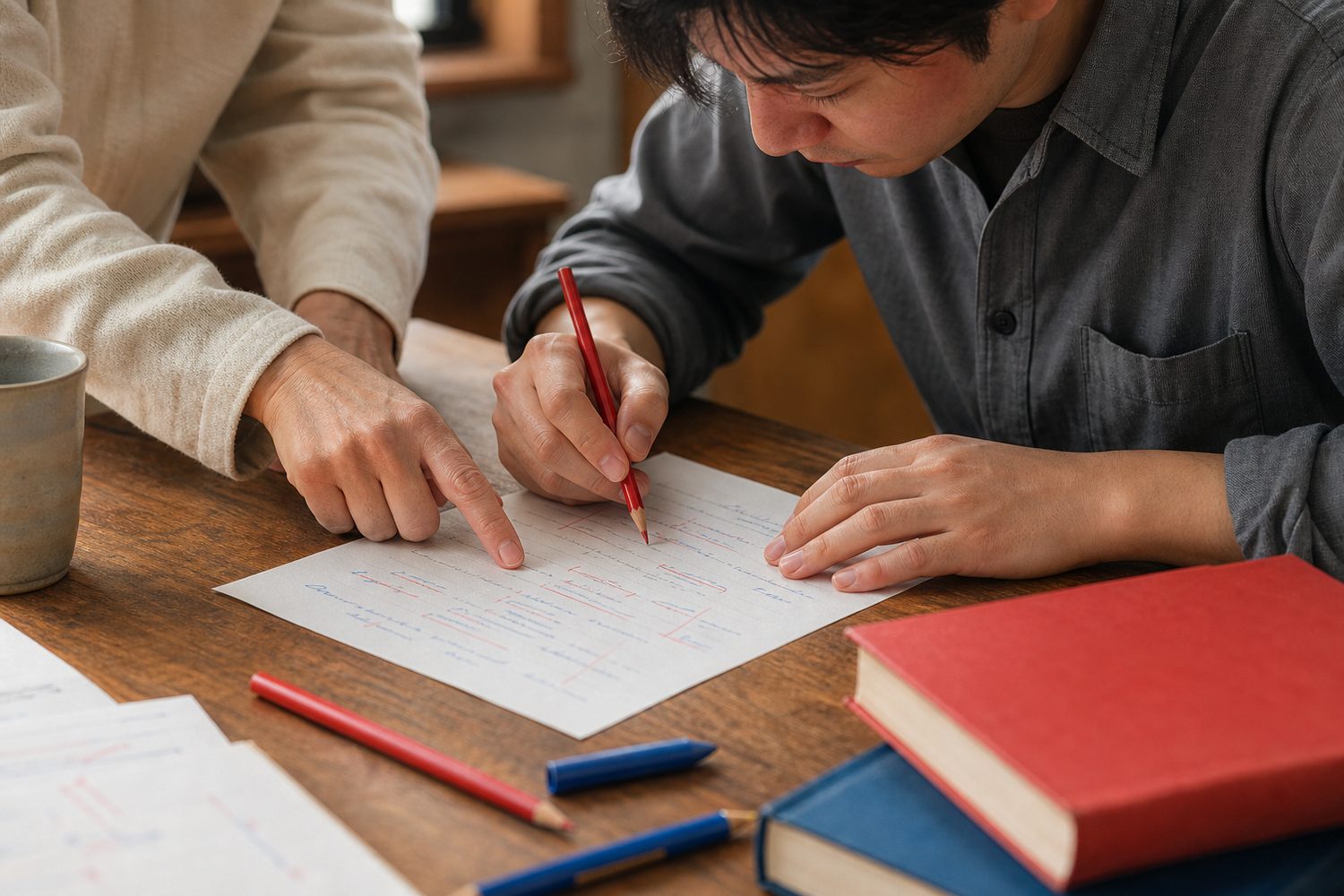
A practical method for making sentences more exact without making them stiff.
Read this piece →
Use prominence, pauses and pitch to hear what a speaker considers important.
Read this piece →
Connect meaning, register, collocation and sound instead of memorising an isolated definition.
Read this piece →